Who Can Liquidate an Onchain Loan? From Health Factor to Transaction Execution
A collateral boundary still exists onchain. The difference is who may submit the liquidation once it is reached.
Put up collateral, borrow less than it is worth, and leave room for its price to move. That is the basic bargain behind a margin loan and an Aave loan. If the collateral falls too far, someone has to bring the debt back inside the rules. Who gets to do that?
Two ways to borrow against collateral
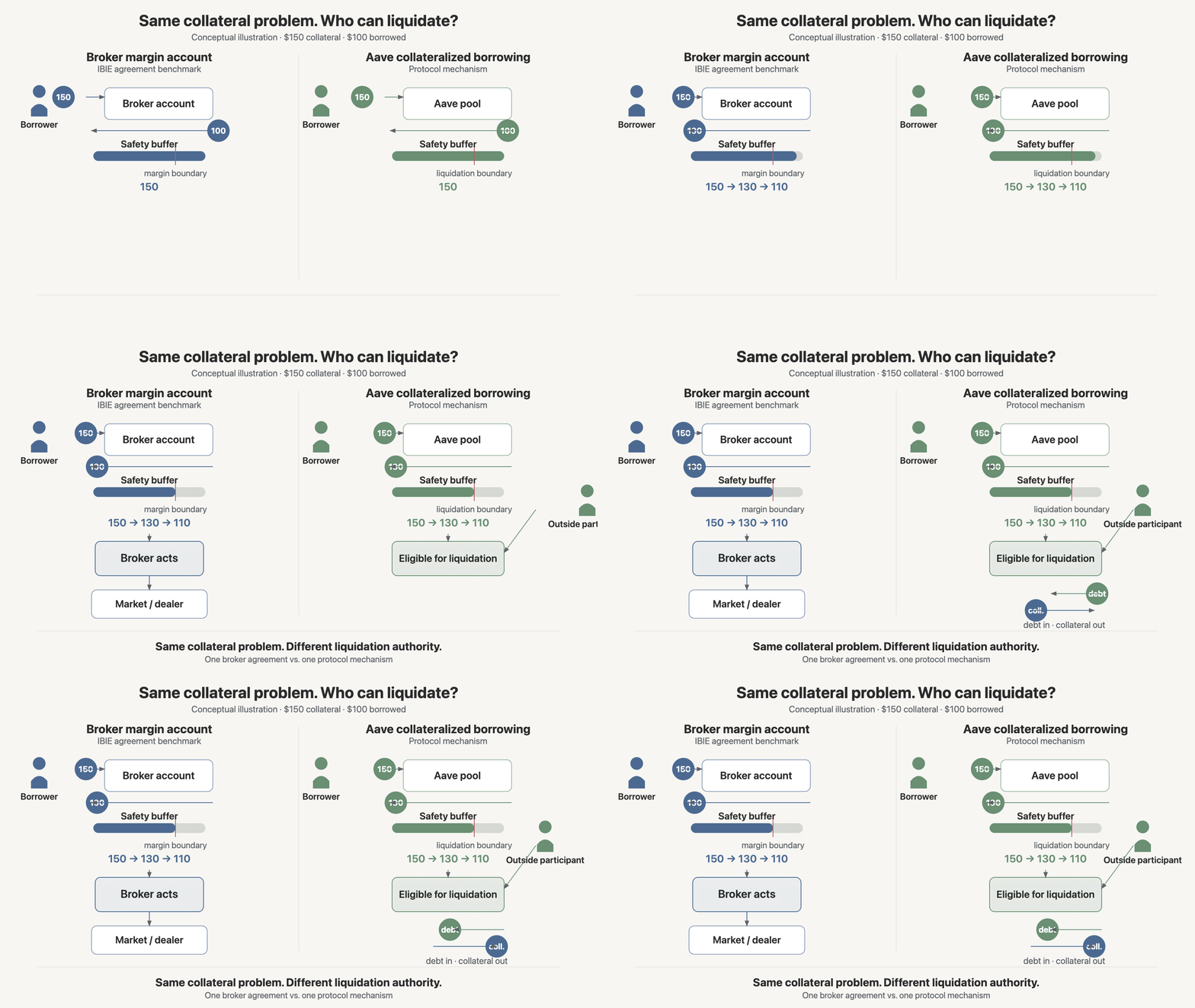
In one Interactive Brokers Ireland customer agreement, IBIE may liquidate an under-margined account at its discretion. The agreement lets IBIE choose what to sell, in what order, and through which market or dealer. This is a narrow comparison of liquidation authority, not a claim about brokerage accounts in general.
Aave V3 handles the borrower side differently. An eligible account can invoke the Pool’s public borrowing entry point, subject to its collateral position, available liquidity, and the reserve and account constraints in force. No named lender approves the request one by one; the protocol validates the transaction. The published borrowing rules still decide what an account can borrow.
When the collateral falls
Aave does not treat every dollar of collateral as one full dollar of protection. Each asset has a liquidation threshold that determines how much of its value counts toward the safety buffer.
health factor ≈ Σ(collateral value × liquidation threshold) / total debt valueSuppose a position has $100 of collateral with an 80% liquidation threshold and $70 of debt. For the health-factor calculation, that collateral contributes $80, so the health factor is about 1.14. If the collateral falls to $85, only $68 counts toward the buffer. The health factor falls below 1, and the position becomes eligible for liquidation. A higher liquidation threshold lets more of the collateral’s value count toward the buffer; a lower threshold brings the liquidation boundary closer for the same amount of debt.
Those dollar amounts are illustrative. Under Aave’s documented rules, eligibility is not the liquidation. Someone still has to send a transaction. The caller brings the debt asset, repays an amount the protocol will accept, and receives collateral under preset terms, including a liquidation bonus. The protocol checks whether the liquidation is valid and settles the transfer. The bonus gives outside callers an economic incentive; the caller still has to obtain the debt asset and get the transaction included.
Permissionless liquidation means that this call is not reserved to one named counterparty.
The mechanism description follows Aave’s current documented health-factor and liquidation model. The observations below are from Ethereum Aave V3 between January 30 and March 10, 2023, so current parameters need not match that historical deployment exactly.
What the sample says about size and assets
In block 16,593,309, one successful liquidation covered 75,876.89 USDC against WETH collateral. It was the largest USDC-debt liquidation in this 17-call subset.
But it sat far above the middle of the group. The median was about 1,884 USDC, the middle half ran from about 705 to 5,513 USDC, and the observed range was 429 to 75,877 USDC.
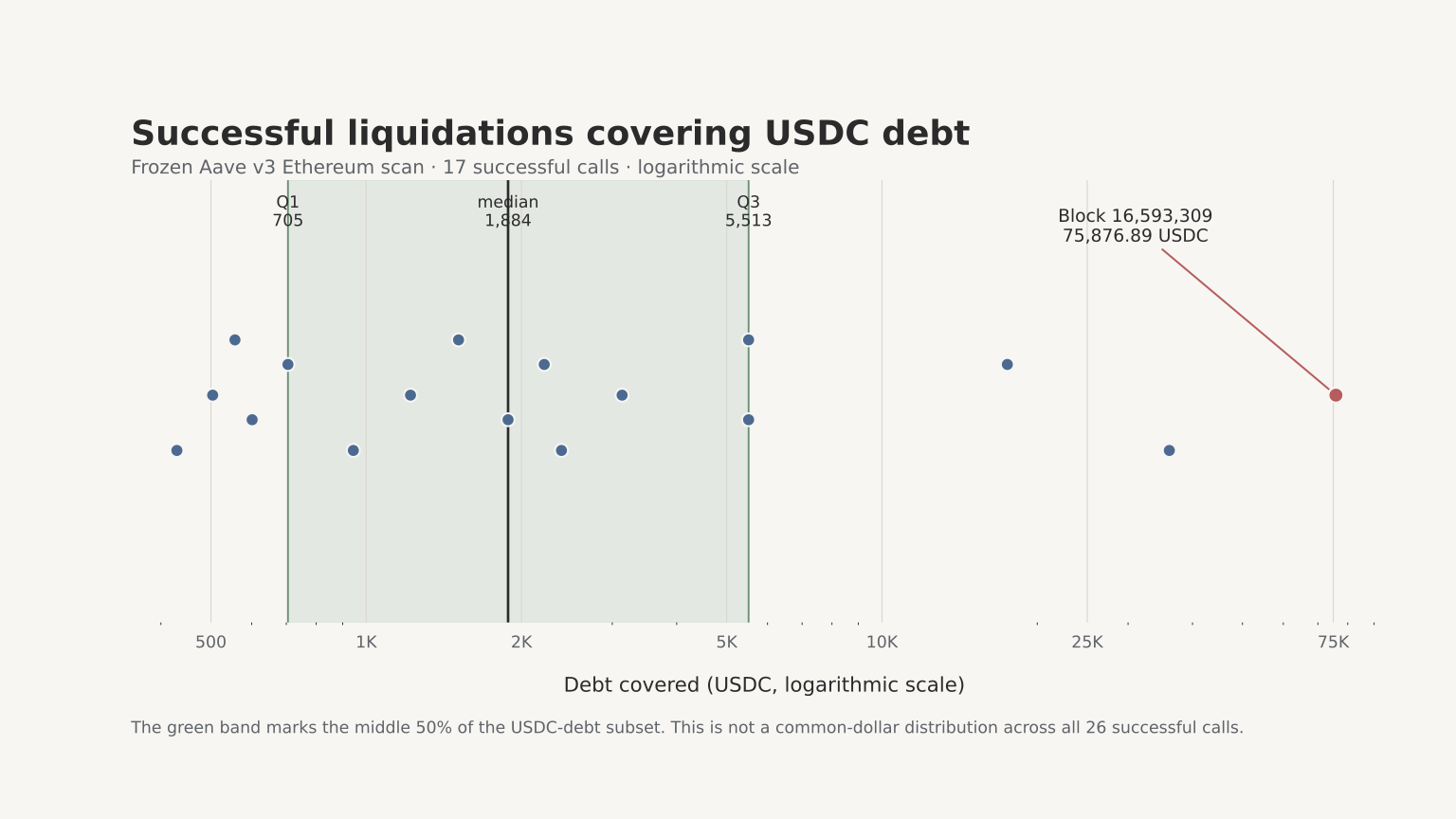
The 75,876.89-USDC transaction is the one that sticks. The distribution is why it should not stand in for the other sixteen.
Within the 26 successful calls, WETH was collateral in 20, USDC was debt in 17, and 15 paired WETH collateral with USDC debt. These counts describe this fixed sample; they are not market shares for Aave as a whole.
A public liquidation still has to be executed
The 75,876.89-USDC liquidation did not call the Aave Pool directly. Its top-level target was an intermediary contract.
That route was not unique to this transaction. The same scan—Aave V3 on Ethereum, January 30 through March 10, 2023—found 26 successful liquidation calls and one trace-confirmed failed attempt: 27 observed attempts.
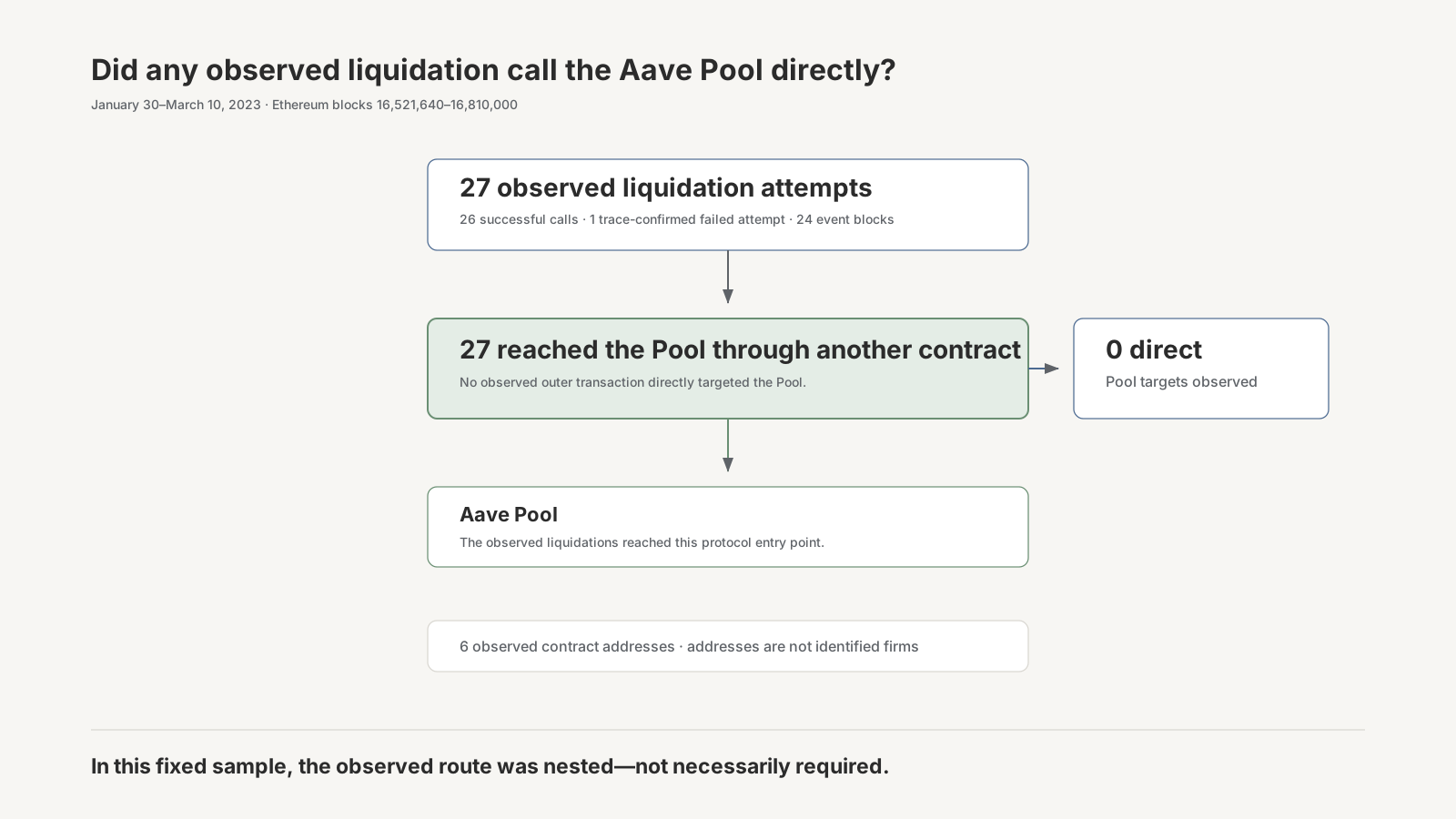
to address was the Aave Pool. This does not show that an intermediary contract is required, identify six addresses as six firms, or cover every liquidation opportunity.
Permissionless describes who may submit the call, not how little machinery is needed to send it. That does not show an intermediary is required. It does show that the caller still had to source the debt asset, build the transaction, and get it included. A public function does not execute itself.
Onchain lending does not make liquidation disappear. It turns liquidation into a public execution problem. Once a position becomes eligible, an outside actor may submit the call—but someone still has to obtain the debt asset, construct a valid transaction path, and get the transaction included onchain. In this sample, every observed attempt reached the Aave Pool through an intermediary contract. Permissionless changes who may attempt the action; it does not remove the machinery needed to execute it.
Appendix
- Official sources. Aave borrowing · health factor and liquidations · Aave V3 Pool · IBIE customer agreement.